Leaving Money on the Table: The Revenue Management Blind Spots Costing Your Hotel Tens of Thousands Annually

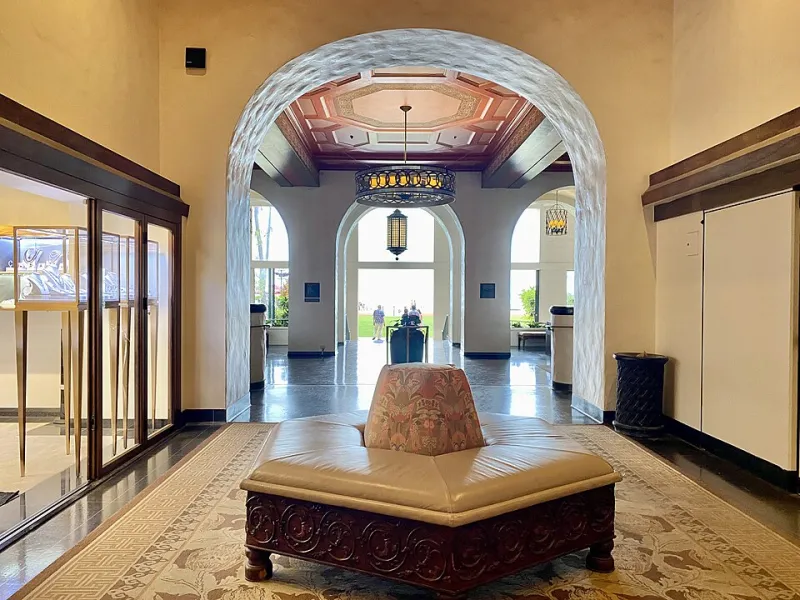
Photo: hotel revenue management analytics dashboard pricing strategy, via edwardgeorgelondon.com
Revenue management is not a glamorous discipline. It does not generate the kind of enthusiasm that a lobby renovation or a new restaurant concept might inspire. It operates largely in spreadsheets, property management systems, and channel management dashboards—unglamorous environments that nonetheless contain the difference between a hotel that captures its full revenue potential and one that perpetually underperforms against its competitive set.
At Solemer Hospitality, our work with hotel operators across the United States has revealed a consistent and somewhat troubling pattern: the vast majority of mid-market properties are making preventable revenue management errors that collectively erode tens of thousands—sometimes hundreds of thousands—of dollars in annual profit. These are not exotic, edge-case mistakes. They are structural and behavioral patterns that repeat across property types, brands, and markets.
This article identifies the most consequential of these errors and provides a practical framework for auditing your own operations.
Error One: Treating Pricing as a Set-and-Forget Function
Perhaps the single most common and costly revenue management failure is the maintenance of static or semi-static pricing structures that fail to respond dynamically to real-time demand signals. A surprising number of independent and smaller branded properties in the U.S. still operate on rate structures that are adjusted weekly at best—sometimes monthly—rather than in response to the continuous flow of market intelligence that modern revenue management platforms make readily available.
The consequences of this approach are asymmetric and significant. During high-demand periods—major local events, holiday weekends, compression nights when competing properties are near capacity—static pricing leaves substantial revenue on the table. A hotel priced at $189 per night on a Friday when demand would support $280 or more is not offering value; it is subsidizing guests at the expense of its own financial health.
Conversely, during softer demand periods, inflexible floor rates can suppress occupancy to a degree that more than offsets the revenue protection they provide. The mathematics of hotel revenue favor a nuanced balance between rate and occupancy—a balance that static pricing is structurally incapable of achieving.
The correction here is not necessarily the acquisition of sophisticated revenue management software, though such tools are valuable. It begins with establishing a discipline of daily rate review calibrated against pickup data, competitive set positioning, and forward-looking demand indicators including local event calendars, booking pace, and channel mix.
Estimated annual revenue impact of static pricing for a 100-room mid-market property: $40,000–$90,000 in unrealized revenue, depending on market and demand volatility.
Error Two: Mismanaging the Channel Mix
The proliferation of online booking channels over the past two decades has created extraordinary reach for hotel properties—and an equally extraordinary opportunity for margin erosion if channel relationships are not managed with precision.
One of the most prevalent errors Solemer Hospitality identifies in operational audits is an overreliance on third-party online travel agencies (OTAs) without a corresponding strategy for migrating bookings toward lower-cost direct channels. OTA commission structures typically range from 15 to 25 percent of room revenue. A property generating $3 million in annual room revenue with 60 percent of bookings originating through OTAs at an average 18 percent commission is effectively surrendering $324,000 annually in distribution costs—a figure that, even partially redirected through direct booking incentives and loyalty programs, represents a substantial profit opportunity.
The error is compounded when rate parity is not actively monitored. Properties that allow OTAs to undercut their direct channel rates—whether through package bundling, member pricing, or opaque rate structures—inadvertently train their guests to book through intermediaries, deepening the dependency cycle with each transaction.
A structured direct booking strategy, supported by a genuine value proposition for guests who book through the hotel's own website or reservation team, is one of the highest-return investments an operator can make. This need not involve elaborate technology; it requires a clear articulation of direct booking benefits and consistent execution across all guest touchpoints.
Estimated annual revenue impact of unmanaged channel mix for a 100-room property: $25,000–$75,000 in excess distribution costs recoverable through channel optimization.
Error Three: Ignoring the Ancillary Revenue Landscape
Room revenue, while foundational, represents only one dimension of a hotel's total revenue potential. Food and beverage, parking, spa services, meeting and event space, and ancillary packages collectively constitute what revenue management professionals refer to as Total Revenue Per Available Room (TRevPAR)—a metric that many mid-market operators track loosely if at all.
The failure to actively manage ancillary revenue streams is a significant source of unrealized profit. Consider a 120-room hotel with an on-site restaurant that is not integrated into the property's revenue strategy. If the food and beverage outlet is managed as a standalone cost center without deliberate upsell programming, package integration, or dynamic pricing for peak demand periods, the property is almost certainly underperforming against its potential.
Similarly, meeting and event space—even modest configurations—represents a revenue opportunity that many properties fail to price or market strategically. Rooms that sit dark on Tuesday afternoons while the property's sales team focuses exclusively on transient room nights represent a structural inefficiency.
A holistic revenue management framework captures and optimizes all revenue streams, applying the same discipline of demand-based pricing and strategic allocation to ancillary offerings as to guest rooms.
Error Four: Misreading Competitive Set Data
No hotel operates in isolation. Rate decisions, inventory allocation, and promotional timing all exist in relationship to the behavior of a property's competitive set—the defined group of comparable hotels against which a property benchmarks its performance.
A common and costly error is the selection of an inaccurate competitive set, or the failure to update that set as the market evolves. A mid-market property that benchmarks against hotels that are either significantly inferior or superior to its own positioning will consistently draw misleading conclusions from its competitive intelligence—either underpricing relative to its true competitive positioning or overpricing in ways that suppress demand.
Equally problematic is the reactive use of competitive data. Properties that simply match competitor rate moves, rather than analyzing the underlying demand signals driving those moves, sacrifice the strategic initiative that effective revenue management requires. The goal is not to mirror the market but to anticipate it.
Conducting Your Own Revenue Audit
For operators seeking to assess their own revenue management performance, Solemer Hospitality recommends a structured audit covering four core areas:
-
Pricing responsiveness: Review the frequency and methodology of rate adjustments over the past 12 months. Identify demand periods where rate optimization was insufficient relative to actual pickup and competitive set behavior.
-
Channel contribution analysis: Quantify the revenue and margin contribution of each booking channel. Calculate the effective net revenue per booking after distribution costs and identify channels where the cost-to-revenue ratio is unfavorable.
-
Ancillary revenue benchmarking: Compare TRevPAR performance against market benchmarks. Identify ancillary categories where revenue per available room lags behind comparable properties.
-
Competitive set validation: Confirm that the property's competitive set accurately reflects its true market positioning and that competitive intelligence is being used proactively rather than reactively.
The findings of this audit will, in virtually every case, reveal specific, actionable opportunities. The aggregate value of addressing these opportunities—across pricing, channel management, ancillary revenue, and competitive positioning—routinely exceeds $50,000 annually for mid-market properties and can approach seven figures for larger or higher-rate assets.
Revenue management excellence is not the exclusive domain of large branded hotels with dedicated teams and sophisticated technology stacks. It is a discipline available to any operator willing to bring rigor, consistency, and intellectual honesty to the analysis of their own performance. At Solemer Hospitality, we believe that discipline is one of the most reliable paths to sustainable hotel profitability—and it begins with an honest look at where the revenue is going.