Travelers Have Rewritten the Rules: How America's Leading Hotels Are Meeting the New Guest
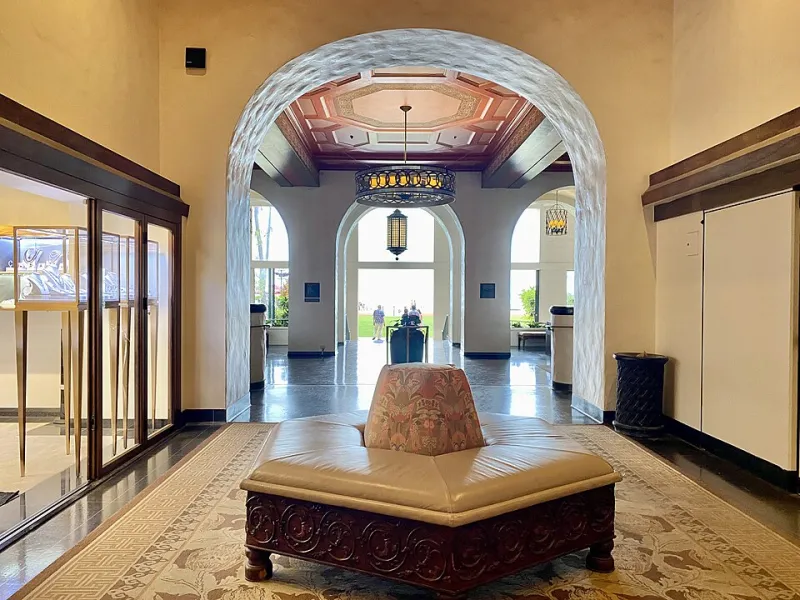
Photo: w_lemay, CC BY-SA 2.0, via Wikimedia Commons
There is a particular kind of institutional memory that shapes how industries respond to disruption. For decades, the American hotel industry operated on a relatively stable set of assumptions: guests wanted clean rooms, reliable service, and a predictable brand experience. Loyalty programs rewarded frequency. Amenities competed on scale. The formula, while not universal, was broadly consistent across segments.
Then came 2020—and with it, a rupture that has proven far more permanent than many initially anticipated.
At Solemer Hospitality, we have spent considerable time examining how traveler priorities have evolved since the pandemic fundamentally altered the relationship between guests and the properties that serve them. What has emerged is a portrait of a more sophisticated, more intentional, and in many respects more demanding American traveler—one whose expectations cannot be met by simply reverting to pre-2020 playbooks.
The Contactless Imperative That Became a Baseline
In the immediate aftermath of pandemic-era restrictions, hotels moved rapidly to implement contactless technologies: mobile check-in, digital room keys, app-based service requests, and QR-coded menus. These innovations were initially framed as health-driven accommodations. What became apparent, however, is that a significant portion of the traveling public genuinely preferred them—not out of fear, but out of convenience.
A 2023 survey conducted by the American Hotel & Lodging Association found that more than 60 percent of U.S. travelers now expect some form of contactless check-in capability when selecting a hotel. More tellingly, properties that removed these features after health protocols were lifted reported measurable guest dissatisfaction. The lesson was unambiguous: what began as a crisis response had become a baseline expectation.
Forward-thinking operators recognized this early. Several major independent and branded properties in markets like Nashville, Austin, and Miami have since invested in fully integrated guest experience platforms that allow travelers to customize virtually every touchpoint of their stay—from room temperature preferences set before arrival to in-app communication with housekeeping—without requiring face-to-face interaction unless the guest actively desires it.
Critically, the most successful implementations have not treated technology as a replacement for human connection, but as a mechanism for making human interaction more intentional and meaningful when it does occur.
The Authenticity Demand: Local Experience as a Differentiator
Perhaps the most profound shift in post-pandemic traveler psychology is the intensified desire for authentic, place-specific experiences. The homogenized hotel experience—identical across markets, engineered for broad appeal—has lost considerable ground to properties that feel genuinely rooted in their communities.
This trend manifests in multiple dimensions. Guests increasingly seek out restaurants that feature locally sourced menus rather than generic continental offerings. They gravitate toward hotels whose art collections, architectural details, and staff reflect the character of the surrounding city or region. They want concierge recommendations that feel like insider knowledge, not curated lists recycled from travel publications.
Operators in cities like Savannah, Portland, and Santa Fe have been particularly adept at leveraging this dynamic. One independent property in the Texas Hill Country, for example, restructured its entire food and beverage program around relationships with regional ranchers and farms, prominently featured local artists throughout the property, and established a dedicated "local experience" team whose sole responsibility is connecting guests with authentic community encounters. The property has reported a marked increase in average length of stay and a substantial uptick in direct booking rates—both metrics that speak to deepened guest engagement.
For larger branded properties, this shift presents a more complex challenge. The standardization that defines a brand's reliability can work against the sense of local distinctiveness that today's travelers increasingly seek. The most effective responses have involved creating space within brand standards for meaningful local expression—whether through food and beverage programming, curated retail offerings, or locally focused programming and events.
Personalization at Scale: The New Competitive Frontier
If authenticity is what draws guests to a property, personalization is what keeps them coming back. The post-pandemic traveler, accustomed to algorithmically curated digital experiences in virtually every other area of life, now carries those expectations into the hotel environment.
This does not mean that every guest wants to be overwhelmed with attention. Research consistently shows that personalization is most valued when it is subtle, relevant, and anticipatory rather than intrusive. A guest who mentioned a dietary restriction during a previous stay expects that information to be remembered. A family traveling with young children appreciates when a property proactively provides relevant amenities without requiring a formal request.
The data infrastructure required to deliver this level of personalization at scale is significant, and many mid-market operators have been slow to invest. Properties that have prioritized customer relationship management systems capable of capturing and utilizing guest preference data across visits are increasingly outperforming those that treat each stay as an isolated transaction.
Several boutique hotel groups operating across multiple U.S. markets have implemented centralized guest profile systems that compile preference data across all properties in their portfolios. A guest who stays at one location in Denver and another in Scottsdale finds that both properties have access to the same preference history—creating a sense of continuity that meaningfully enhances the perceived value of the relationship.
Wellness, Flexibility, and the Blended Traveler
Two additional dimensions of post-pandemic guest behavior deserve particular attention. The first is the sustained elevation of wellness as a travel priority. American travelers are now more likely to factor a property's wellness offerings—fitness facilities, spa services, sleep-supportive amenities, healthy dining options—into their booking decisions than was the case before 2020.
The second is the emergence of the "blended traveler"—the individual or family combining professional obligations with leisure travel, often extending business trips or working remotely from destination properties. This demographic requires a specific set of accommodations: reliable high-speed internet, comfortable workspace configurations within guest rooms, flexible checkout policies, and amenities that serve both productive and restorative purposes.
Properties that have thoughtfully designed their offerings around this blended traveler profile—particularly in markets like Miami Beach, Nashville, and the mountain resort corridors of Colorado—have captured a disproportionate share of this growing and relatively high-value segment.
Adapting Without Abandoning Excellence
The core challenge for hotel operators navigating this landscape is adaptation without dilution. The fundamental commitments that define hospitality excellence—impeccable cleanliness, genuine attentiveness, operational reliability—have not changed. What has changed is the context in which those commitments must be demonstrated.
At Solemer Hospitality, our counsel to operators is consistent: begin with an honest assessment of where your property's current offerings align with evolved guest expectations, and where meaningful gaps exist. Prioritize investments that simultaneously serve guest needs and operational efficiency. And resist the temptation to treat these shifts as temporary—because the traveler who emerged from the disruptions of the past several years is not going back.